Showing posts with label Octavia Butler. Show all posts

Sunday, April 2, 2017

Reading Challenge: March 2017


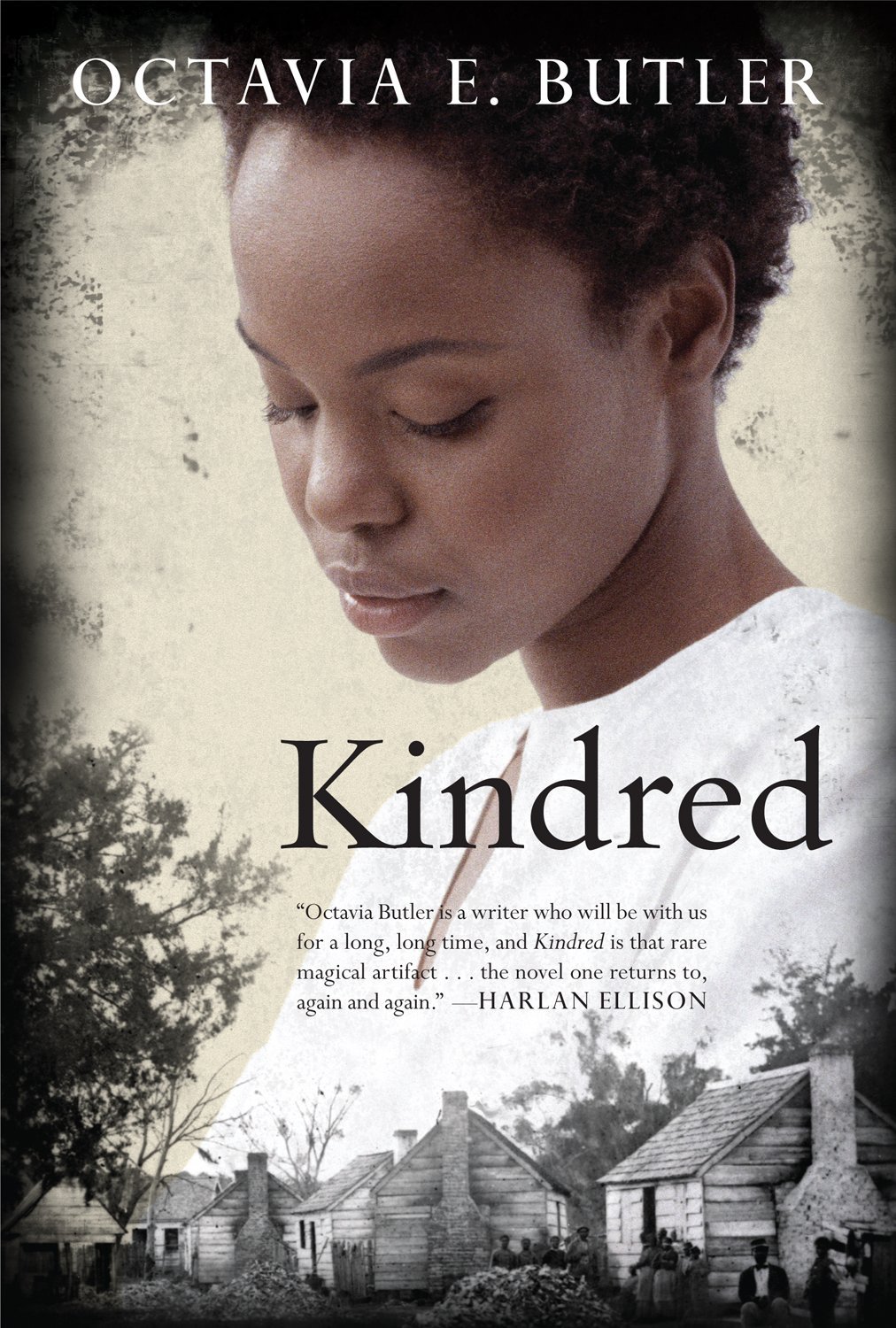
Kindred by Octavia Butler (book by a person of color)
My review for Kindred can be found here. This story is about slavery and racism, as seen through the eyes of a time traveler.

Tales of Mystery and Madness by Edgar Allen Poe, illustrated by Grim Grisly (a book with pictures)
The illustrator's name truly fits him: the illustrations are grisly and uncomfortable. I would go so far as to say they are more gruesome than Poe's words. I love Poe's writing, but the illustrations were a bit much.

A Thousand Splendid Suns by Khaled Hosseini (a novel set during wartime)
An uncomfortable sort of book to read; raises a lot of good questions. Set during the end of the 1900s-beginning of 2000s, the story is of two Afghani women who endure through many long years of war and abuse.

Inside Out and Back Again by Thanhha Lai (a book about an immigrant or refugee)
Based on the author's experiences, this book tells the story of a girl and her family fleeing Vietnam and settling in Alabama. What's it like to come to a country where you don't speak the language, don't like the food, have a different religion? Thanhha Lai shares her thoughts.

Look Me in the Eye! by John Elder Robison (a book by or about a person who has disability)
John Elder is a tech and music genius. He also has Asperger's Syndrome. Having never read a book like this before, I was really interested in the way he thought and how he was able to succeed in life even with a disability---and in some cases, because of the disability.

Coraline by Neil Gaiman (an audiobook)
Creepy children's book about a girl who meets her "other mother." Would totally recommend to anyone who likes eerie, tension-filled books.

A drawing I did based on the Coraline artwork on the audiobook. (original drawing by Dave McKean on the left)
Murder on the Orient Express by Agatha Christie (a book involving travel)
What should have been a quiet and uneventful journey from Istanbul to England is interrupted by murder! Luckily, Hercule Poirot is more than willing to investigate.

Also read, but not for the challenge: 

Physics: Everyday Science at the Speed of Light by Isaac McPhee

A quick overview of the history of physics, from ancient times to now. Explains scientific principles and how they were discovered simply and easily. There were times when I felt the author left out a bit too much, however. Still a good book for the beginning science reader. 

Started reading We Were Liars by E. Lockhart, but didn't like it much so I stopped.

Cover photo from Unsplash.

Friday, March 10, 2017

Book Review: Kindred


Dana is an African-American woman in the 1970s, living a normal life until she is unexpectedly dragged back in time to the Maryland slave days, where she saves the life of her great-great-great-grandfather . . . a white slaveholder named Rufus Weylin.

This book was written by Octavia Butler, the first African-American woman to publish science fiction novels. I will admit that this book doesn't feel much like sci-fi, mostly because it never makes any attempt to explain what is going on, but I feel like that wasn't the point. This book made me feel things, which I think was the point. I felt shock at the treatment slaves received at the hands of their masters, and sometimes at the hands of other slaves. I felt sadness at the portrayal of how slavery and discrimination affects both blacks and whites (similar to how sexism affects both females and males). I felt disgust at Rufus' treatment of Dana, Alice, Nigel and others, even knowing what he did about Dana and where she came from.

My main understanding of this book was focused on how our environment affects us. At first, Dana is confused and annoyed by how submissive the slaves are, how they don't fight back against their masters, but as she spends more and more time in the past, she begins to see these very behaviors in herself. She also has a hard time with how Rufus behaves; he knows she is from the future, he knows that there will be more freedom and equality for people of color in her time, and yet he persists in his odious behaviors towards the slaves. Why doesn't his attitude towards her change? Why can't she influence him to become more progressive?

The answer is similar to why the slaves act the way they do: that's the way they were raised, and how their environment influences them to act. The slaves are acting for survival. They know that certain behaviors will get them beaten, sold, or killed, so for the most part they avoid those behaviors. The cook Sarah, for instance, keeps her anger in check because of constant threat that her daughter might be sold if she fights back. It is not that she cannot rise and stand up for herself, but she understands the consequences of doing so.

Rufus has been raised to believe blacks are beneath him; any discomfort he has with these ideas is rationalized and explained away. Again, he could have risen above this, been respectful of Alice, treated Nigel like an equal, but he allowed his environment to overcome him.

I found myself thinking about this theme later. What toxic behaviors am I learning from my environment? What mindsets do I have that I can change?

I had many more thoughts and feelings about this book, but I felt these were the most important and relevant. We are all products of our environment, but that doesn't mean we can't change! Society changes---slowly, but surely, and it changes because of its people.

So, change your mindset. Be kinder, be more loving. Learn more about other cultures, ethnicities, races, and sexes. Rome was not built in a day, but together we can change the world.