The Pull of the Ocean by Jean-Claude Mourlevat (book with an unreliable narrator)
Modern-day adaptation of Tom Thumb. I checked this out because it had twins in it (even though the twin part turns out to be unimportant) and was not particularly impressed. It's beautifully written, but vague.
White is for Witching by Helen Oyeyemi (A book from a non-human perspective)
Much like The Pull of the Ocean, this book is beautiful but even harder to understand. Miranda has a rare eating disorder called pica: she finds non-food items like chalk and plastic tastier than actual food. As her father and twin brother try and help her, mysterious things start happening in their childhood home. In fact, they are so mysterious, they are not even explained to the reader!
Clockwork Angel by Cassandra Clare (steampunk novel)
I liked this better than City of Bones, but was still bored by how the author went on and on and on and on about how blue Will's eyes were and how pale Jem was---look, I get it, okay? They're cute, can we move on? Clare has built a fascinating world that was overshadowed by how hot Tessa's love interests were.
The Color of Water: A Black Man's Tribute to His White Mother by James McBride (book with a family member term in the title)
McBride sets the stage for his mother's life in this novel, using both her words and his to describe what their lives were like.
Everything, Everything by Nicola Yoon (A book that's becoming a movie in 2017)
Had a cool twist with Maddy's disease and a discussion about what it means to really live, but nothing particularly special. I'm really not sure how I feel about the ending.
The Man Who Was Thursday by G.K. Chesterton (book with a month or day of the week in the title)
Wow. Such weird. Much crazy. Had some genuinely funny moments, but mostly it was just . . . weird.
Also read, but not for the challenge:
Legend by Marie Lu
I really liked this book! June and Day were both really awesome protagonists, in a way that was shown as well as told to us. Also liked how it explored how governments, schools, and the media can shape how we view the world, history, and the people around us.
What the Nose Knows by Avery Gilbert
Gilbert is a sensory scientist, and he brings many studies, theories, and insights into this book. Fascinating and in-depth look at how our noses work.
The Neptune File by Tom Standage
A story about the triumph of Neptune's discovery, and how that has influenced science to this day. Neptune was the first planet to be discovered mathematically and theoretically before it was observed.
Showing posts with label Book Review. Show all posts
Showing posts with label Book Review. Show all posts
Tuesday, May 16, 2017

Friday, March 10, 2017
Book Review: Kindred
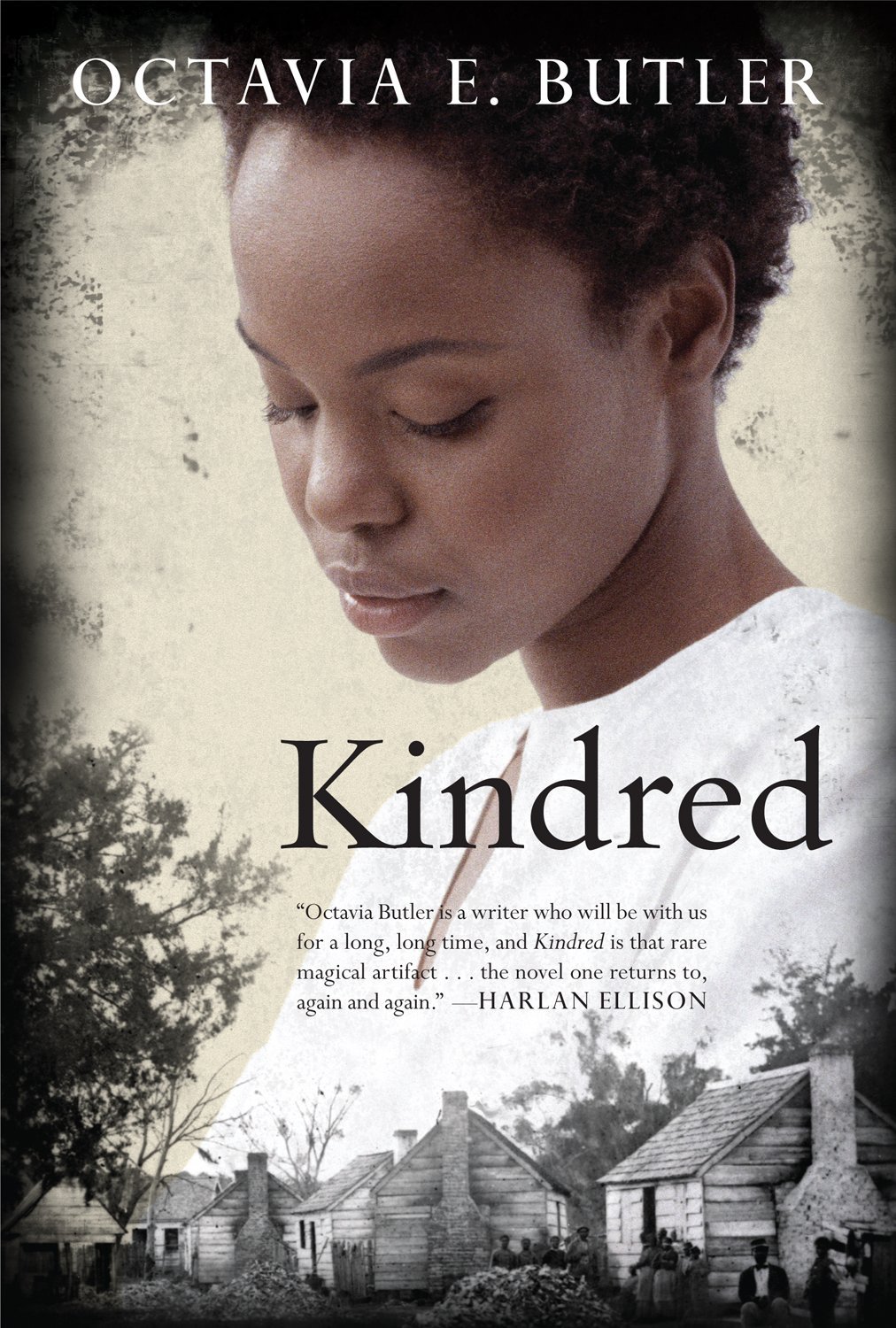
Dana is an African-American woman in the 1970s, living a normal life until she is unexpectedly dragged back in time to the Maryland slave days, where she saves the life of her great-great-great-grandfather . . . a white slaveholder named Rufus Weylin.
This book was written by Octavia Butler, the first African-American woman to publish science fiction novels. I will admit that this book doesn't feel much like sci-fi, mostly because it never makes any attempt to explain what is going on, but I feel like that wasn't the point. This book made me feel things, which I think was the point. I felt shock at the treatment slaves received at the hands of their masters, and sometimes at the hands of other slaves. I felt sadness at the portrayal of how slavery and discrimination affects both blacks and whites (similar to how sexism affects both females and males). I felt disgust at Rufus' treatment of Dana, Alice, Nigel and others, even knowing what he did about Dana and where she came from.
My main understanding of this book was focused on how our environment affects us. At first, Dana is confused and annoyed by how submissive the slaves are, how they don't fight back against their masters, but as she spends more and more time in the past, she begins to see these very behaviors in herself. She also has a hard time with how Rufus behaves; he knows she is from the future, he knows that there will be more freedom and equality for people of color in her time, and yet he persists in his odious behaviors towards the slaves. Why doesn't his attitude towards her change? Why can't she influence him to become more progressive?
The answer is similar to why the slaves act the way they do: that's the way they were raised, and how their environment influences them to act. The slaves are acting for survival. They know that certain behaviors will get them beaten, sold, or killed, so for the most part they avoid those behaviors. The cook Sarah, for instance, keeps her anger in check because of constant threat that her daughter might be sold if she fights back. It is not that she cannot rise and stand up for herself, but she understands the consequences of doing so.
Rufus has been raised to believe blacks are beneath him; any discomfort he has with these ideas is rationalized and explained away. Again, he could have risen above this, been respectful of Alice, treated Nigel like an equal, but he allowed his environment to overcome him.
I found myself thinking about this theme later. What toxic behaviors am I learning from my environment? What mindsets do I have that I can change?
I had many more thoughts and feelings about this book, but I felt these were the most important and relevant. We are all products of our environment, but that doesn't mean we can't change! Society changes---slowly, but surely, and it changes because of its people.
So, change your mindset. Be kinder, be more loving. Learn more about other cultures, ethnicities, races, and sexes. Rome was not built in a day, but together we can change the world.
Monday, May 12, 2014
Book Review: The End of Infinity

"The End of Infinity" by Matt Myklusch
Third and final installment in the Jack Blank Adventures. Contains spoilers.
People cannot become whatever they want. You, for example, may hope and pray and wish to become a carrot, but I'm sorry, that just ain't happening. Someone who suffers from hand tremors can never become a brain surgeon. These are facts of life; this is reality. But, I think the main idea behind saying "people can be whatever they want" is that we shouldn't limit ourselves. It may be impossible for just anyone to become a carrot, or a brain surgeon, or the President of the United States, but that doesn't mean dreams shouldn't be dreamt. A title like The End of Infinity may sound weird and oxymoronic, but it actually has a lot to do with this idea of fighting to become something other than what the world or destiny tells us we should be.
After the events of The Secret War, Jack has been a captive of the Rustov for a year. He has only vague memories of what happened, and he's pretty sure from what he does remember that he doesn't want to remember any more. The infection is slowly but surely taking over his body---there are physical signs now. And when he returns to the Imagine Nation with news of an impending invasion, panic breaks out in the different boroughs. It would appear that Jack---and the world---has already lost the war with the Robo-Zombies.
The Rustov are good at panic; it's their most-used gameplan. Throw in a bit of panic, and their enemies will tear themselves apart! Their horrifying appearance, the subterfuge and sneaking, the lying words, all these are meant to plant seeds that will lead to the downfall of their next victim. Letting Jack be rescued and taken to the Imagine Nation was their way to inducing the right conditions for invasion. Now that all secrets have been done away with---everyone now knows about Jack's future and the Mecha virus---his reappearance is just the final proof that he is a Rustov spy, ready at any moment to make the final transformation into the greatest threat our world has ever faced. Through fear and panic, the Imagine Nation has already lost the war with the Rustov.
Jack himself has been conditioned. At St. Barnaby's, he was told he would have to be a toilet brush cleaner; now, he can only be Revile. He's been taught for so long about destiny, about fate, about how he cannot change what and who he is, that he is starting to believe it. Through Khalix's confident whispers and the weight of the future, Jack has already lost the war with the Rustov prince. All of this is what makes the Rustov so dangerous.
There is so much to admire in these books. The danger of fear and panic, the consequences of keeping secrets from loved ones, fate and destiny, the nature of family, belonging, and friendship, the difference between being wise and being smart. This last book really ties up a lot of the questions that were raised in the series. A lot of crazy events and plot twists happen (the revelation of Jack's parents was really a shocker, and yet still made sense). There are heart-twisting moments, betrayals, and true love ;) At the same time, it has its flaws. The writing is still stilted, and sometimes I groaned at how trope-y and cliched the characters were, but it still worked. We started out at St. Barnaby's Home for the Hopeless, Abandoned, Forgotten, and Lost, and came to the End of Infinity.
"It's crazy. I haven't felt this way in so long. Not ever, really."
"Like what?"
"I don't know. Like I'm free. Right now I don't know what to do with myself. I finally got past the future, and for the first time in forever, I don't know what happens next." (pg. 398)
http://www.jackblank.com/
Book Review: The Secret War

"The Secret War" by Matt Myklusch
After the shocking revelations in the last book, Jack Blank braces himself as an upcoming Rustov attack is revealed and a highly trusted individual threatens to give away Jack's deepest, darkest secrets . . . for a price, of course.
I didn't like this one quite as much as the other two. Jack made a lot of desperate, questionable decisions. I guess the author made me like him in the first book, made me angry at him in this one, and then got me to love him in the last one. Jack does not stay the same throughout the books; he grows and learns too, as do the other characters. Allegra has learned to control her powers, and Skerren (*gasp*) cracks a few straight-faced jokes, mostly at Jack's expense.
I, personally, am mad at Stendeval. I didn't understand why he advised Jack to keep his secrets entirely to himself, since this is what got Jack into so much trouble throughout the book. I think he should have told at least Allegra. Also, Stendeval just seemed to "wise old mentor" trope-y in this book.
I liked the introduction of Trea and Zhi. They added a nice little dimension to the story, and now Jack has a "science pal" he can geek out with. The mystery of Jack's "prototype" was cool as well, even if it was just a little obvious.
This book also contains what I believe to be the first clues as to who Jack's parents are. The author has a different opinion, but I guess it's one of those things which can be seen either way.
Sunday, April 13, 2014
Book Review: Elements of Style

"Elements of Style" by William Strunk Jr. and E.B. White
A good resource. Some of the suggestions are a little out-dated (for instance, I didn't realize that 'utilize' was not always considered a word), but this book contains a lot of good suggestions, especially for the beginning writer. Perhaps a way to read this book would be to check the rules you are not sure about.
About the Authors: William Strunk Jr. wrote this book for his English classes; E.B. White was one of his students. Many years after taking Strunk's class, White got a hold of the "little black book" and revised it.
Friday, April 4, 2014
Book Review: The Accidental Hero

"The Accidental Hero" by Matt Myklusch
Jack Blank lives in a dreary orphanage, thinking he is going to grow up and become a toilet brush cleaner. The administrators have done their best to squash the hearts and souls out of every child there, but they do not know that Jack has a secret stash of comic books hidden in the library, lively books which feed his imagination and make him yearn for the hero's life.
Of course, when Jack comes in with the story of a Robo-Zombie attacking him and destroying the orphanage's power generator, his imagination only discredits this tale. But someone believes him, and comes to take Jack away from his stifling life, revealing that he belongs in the wonderful world that comic books only at. In the Imagine Nation, with its superheroes and villains, aliens, fantastic technology, and access to a marvelous universe, all of Jack's dreams could come true . . . if it weren't for the dark shadows that lurk in the recesses of the city . . . and in Jack's own future. For Jack soon discovers that he has an amazing ability - one that could make him the savior of the Imagine Nation and the world beyond, or the biggest threat they've ever faced.
Ahem. Excuse that dramatic summary, but I felt like I should try and cast this book in a good light. That last line was stolen, by the way, from the actual official book summary.
I really enjoyed this book. The first time I tried reading it, I was really put off by how this was obviously Matt Myklusch's first book--the writing clearly intimated this--so I found myself skipping to the end and being incredibly intrigued by the ending I found there. This second read-through gave me a greater appreciation for it, because while this book has its flaws, it is still awesome.
This book was written for twelve-year-old boys, and that much is obvious (I mean, "the Imagine Nation"? Heh, yeah). I really enjoyed the plot, characters, and the morals that could be squeezed out of it.
The plot I'll speak on only briefly, since that was the first thing that first interested me and I don't want to give much away. There are several mysteries floating around in this book: one Robo-Zombie wants Jack dead, but the rest want to capture him? Who are Jack's parents, and who left him in New Jersey? Why does Jack's arrival in the Imagine Nation coincide with more and more sightings of the Robo-Zombies? Who is the real Great Collaborator? The plot really kept me hooked throughout the book.
The characters: There is quite the cast of characters to be found in this book. Jack Blank, the protagonist, a twelve-year-old who will not shut up, even why I was sure talking was just going to get him in more trouble. Jazen Knight and Blue, the android and police officer who stand by Jack's side when no one else will. Allegra, a timid alien from a race of people renowned for their fearlessness and bravery. Skerren, who has his own reasons for hating Jack. Stendeval, the 500-year-old super who knows more than he's telling. Jonas Smart, the smartest man in the world (and the first to let everyone know that). Horvath, Virtua, Speedrazor, Mr. Calhoun . . . the list goes on. I am really interested to see where these characters go in the next book.
There are so many good thoughts in this book, about superheroes, villains, and the nature of destiny. The main idea, I believe, is about how everyone controls their own destiny. This theme runs throughout the book, from Mr. Calhoun's standardized tests to Stendeval's insistence that the future is not set in stone. Jack, after figuring that Stendeval probably knows who his parents are, hounds him for information, while the superhero keeps on telling to be patient. A section from the book goes like so:
"I already know who I am," Jack said. "I don't need you to tell me that anymore."
"I see," Stendeval said, nodding. "However, I don't recall ever saying I was going to tell you who you were. I believe I told you to have patience," he said. "I seem to remember saying that one day you would tell me the answer to that question." (pg. 457)
Stendeval knew that Jack had to make his own future.
IDK, guys, I'm just having a lot of Jack Blank feelz right now. I would recommend this book to anyone who is interested, especially if you have younger children.
Jack Blank website: http://www.jackblank.com/
Jack Blank website: http://www.jackblank.com/
Saturday, March 15, 2014
Book Review: A Chemical History of A Candle
"The Chemical History of a Candle" by Michael Faraday
A series of six lectures given by the natural philosopher Michael Faraday, in which he describes what happens when a candle is lit. Written in 19th-century English, it is not a clear or precise as science books written today, but I really enjoyed it because it was lovely to take something so small and everyday as a candle and break down everything that happens with it, from how they are made to the carbon dioxide (or carbonic acid) that is produced in combustion. He even links together the combustion of a candle and human inhalation/exhalation. The knowledge that he displays is incomplete and sometimes told in a weirdly romantic fashion (especially the last paragraph), but mostly this is what I have come to expect from older science books. These lectures were taken down by a stenographer--they are word-for-word from Faraday's mouth.
A good book for a beginner and someone interested in the history of science.
About the Author: Michael Faraday (1791-1867) was a "natural philosopher" (AKA chemist or physicist) from England. Although he came from a poor background, he bravely sent off letters to scientists, hoping for a chance in a laboratory. Sir Humphrey Davy hired him because of a temporary eye injury, and Faraday's job became permanent after he made a good impression. This brought Faraday to the Royal Institution, which would become linked with his name forever--partially because he helped save it from bankruptcy. When the Royal Institution began giving lectures, he first served as an assistant, but then later gave lectures of his own--one of which was "The Chemical History of a Candle." After forty-plus years of giving these popular lectures, he resigned in 1861.
Subscribe to:
Posts (Atom)